187 anglers reading right now · ⚠ Launch Promo ends in 05:47:02
An Amish Guide · DIY Angler Edition 2026

The Fellow Down The Bank Isn't Out-Fishing You Because He Spent More. He's Out-Fishing You Because He Knows Six Things You Don't.

Reading water. Bait and lure choice. Line and knots. Hook size. Time of day. Depth and presentation. Get those six right in your first week, and the water you've been throwing $30 lure packs at starts giving fish up on its own.

Skip the $900-a-year tackle-aisle guessing game.

Do what lifelong anglers actually do — in 30 days, in plain English, one job per day. No boat. No fish finder. No electronics.

Works On Your Water, Wherever You Fish

Farm pond or big river, Pennsylvania or Missouri, bank or johnboat — the plan adjusts to what's actually in front of you. You don't have to know what's swimming in there. Day 1 walks you through reading any piece of water in about twenty minutes. From there, the book gives you the exact 30-day plan for your situation.

Less than one decent rod. Less than half a tank of gas to the lake.
Final sale — not refundable once delivered. By clicking, you agree to our Terms, Privacy Policy and Refund Policy.
🔒 Secure Checkout Instant Download Yours Forever
140-page PDF · 30 chapters One job per day for 30 days Printable quick-reference charts No subscription
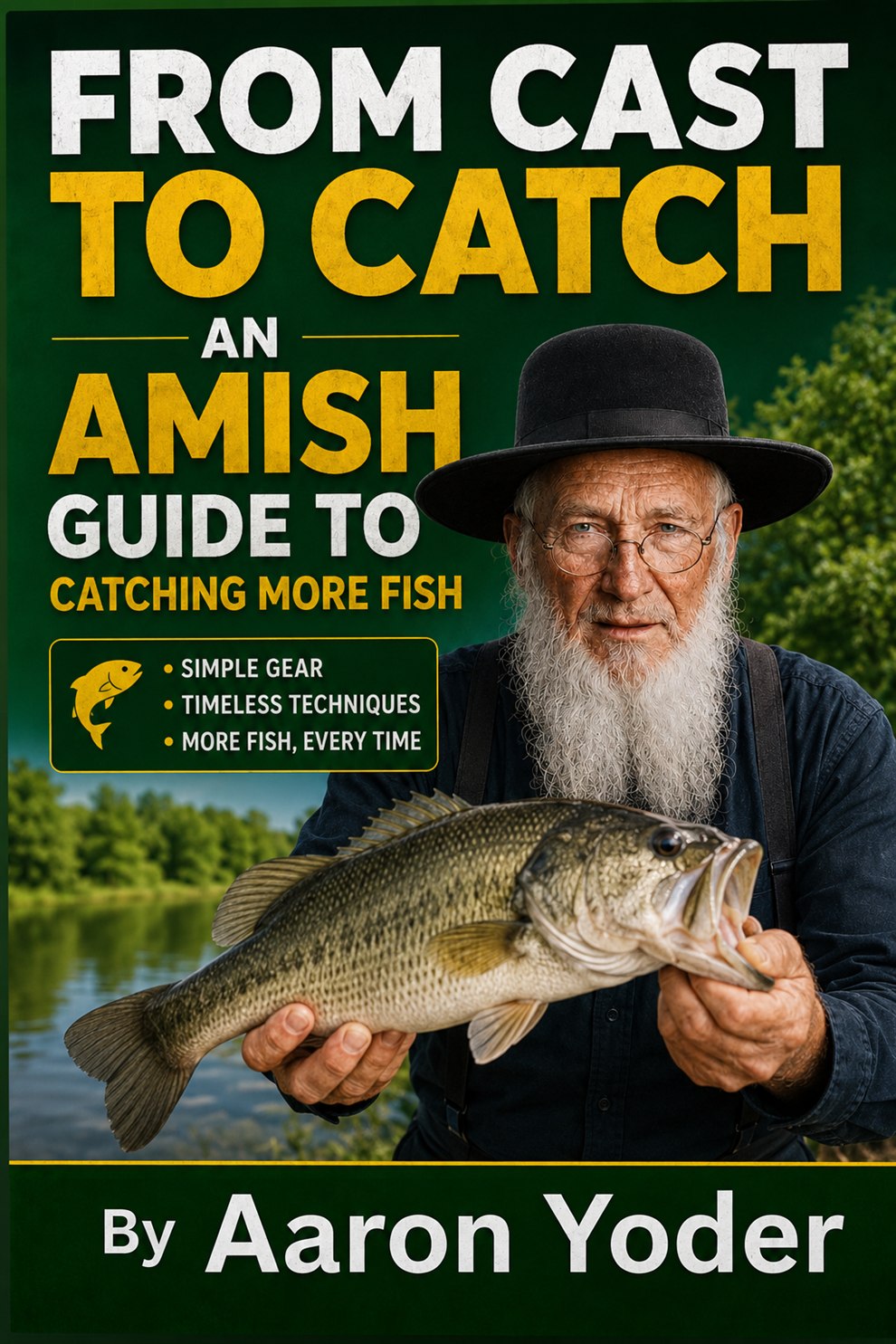
From Cast To Catch book cover
Aaron Yoder
Written by Aaron YoderPlain-English fishing without the tackle-shop guessing game.
30 Days · More Fish · Fewer Skunked Trips · Water That Finally Makes Sense
The Money Chapters

You're Not Paying For Fish. You're Paying For Someone Else To Know Which Lure To Tie On.

The most powerful part of this book is not the bait list. It is the moment you see the tackle-aisle math. The pretty packaging, the scent sprays, the twelve colors of the same crankbait, the gadgets — that is what turns a cheap hobby into a recurring annual bill.

From Cast To Catch shows the old angler's version of the same logic: what to tie on, when to throw it, what to skip entirely, and when the fish simply are not biting no matter what you spend.

Get The Book · $35 → One avoided mistake can pay for it.

Example math from the book's trip-cost chapter: one angler fishing roughly forty trips a year and landing about 120 keeper-size fish. Your water, local pricing, license fees, and driving distance may differ.

Annual Cost — One Angler
Guessing Game
With This Book
Lures, plastics & terminal tackle
$310
$85
Rods, reels & "upgrades"
$240
$95
Live bait & store-bought bait
$180
$45
Line, respooling & break-offs
$70
$30
Gas & wasted trips
$260
$120
License & permits
$45
$45
Annual total · cost per fish landed
$1,105 · $9.21/fishThe Guessing Game
$420 · $3.50/fishRunning The Book's Numbers
Verified reader review · Money chapter
★★★★★
“The tackle math chapter is genuinely the angriest I've been at a store shelf in years. I added up what I'd spent in twelve months — the swimbaits, the scent sprays, the three rods I convinced myself I needed, the tournament-grade line — and it came to $980 for one guy fishing a farm pond and a stretch of creek. The book's short bait list plus one good spool of line costs me about a third of that, and I'm catching more than I ever did on the expensive stuff. The order list in the back told me exactly what to buy and what to walk past. Book paid for itself before I finished it.”
— Dale W., Columbus, OH · farm ponds & the Scioto
Get The Book · $35 →One skipped lure run can change the math.
Aaron Yoder
Meet Aaron Yoder

The plan I wish someone handed me before I wasted years buying the wrong tackle.

One Saturday years back, I was standing on a bank I'd fished a hundred times with a tackle box that cost more than my first rod and reel put together, three hours gone, and nothing to show for it. An older fellow forty yards down had a cane pole, a coffee can, and a stringer with five fish on it. I finally swallowed my pride and walked down to ask him what he was using.

He wasn't using anything special. He was reading the water. He knew where the fish were before he made a cast, and I had been throwing expensive lures at dead water all morning.

That was the turn. I spent years learning what those old anglers already knew — why the fish move when the weather changes, why the same pond fishes completely differently at six in the morning than at noon, and which jobs a normal person can handle without a boat, a fish finder, or the tackle aisle deciding for them.

You might already know me from YouTube, where I share what I've learned about fishing, the water, and doing it the practical way. This book is the 30-day version of what took me a decade to figure out: read the water, fix your line, match the bait, size the hook, fish the right hours, and stop letting the tackle shop make your plan for you.

It is not written like a textbook. It is written like a Saturday morning checklist for the angler who wants to come home with something.

— Aaron Yoder
Sound Familiar?

The empty stringer doesn't lie. And right now it feels like it is judging you.

  • ×You spent hundreds at the tackle shop on rods, lures and gadgets you barely understood, then went home skunked anyway.
  • ×The fellow down the bank pulls fish out of the same water with a $20 rod and nobody has ever explained to you why.
  • ×You've read forum threads and watched videos that contradict each other, and the shop clerk still could not tell you what to throw on your water this week.
  • ×Your family keeps asking how the fishing went, you're out there every weekend, and the cooler still comes home empty.
  • ×You change lures every ten minutes without knowing whether the problem is the lure, the depth, the line, or the hour — so the change almost never fixes anything.

The enemy is not laziness.

It is buying by packaging instead of diagnosis — then letting the tackle aisle decide the plan for you.

  • Read the water first.
  • Bait by conditions, not packaging.
  • Diagnose before you re-tie.
  • Timing before spending.
Verified reader review · The neighbor problem
★★★★★
“I bought it because my brother-in-law Steve limits out on the same lake I've been fishing for nine years, and I'd started making excuses not to go with him. I'm 51. I had no idea I'd been throwing a bait meant for open water into a bank full of timber, on the worst two hours of the day, on line heavy enough to tow a truck. Day 1 saved me from another season of doing the exact opposite of what that water wanted. I'm a month in. I'm not beating Steve yet, but I'm not the guy holding the net anymore either.”
— Greg M., Charlotte, NC · lake & bank fishing
The 30-Day Plan · Week One

Week One — Look Before You Spend

The first seven days stop the guessing. Before you buy another lure, the book walks you through the seven decisions that determine whether the rest of the month works.

Day 1Read the waterStructure, current, depth changes, shade and cover — twenty minutes, no electronics, no experience needed.
Day 2Check line and knotsThe cheapest fix in fishing — old line, wrong pound test, and three knots that quietly cost you every good fish.
Day 3Audit the tackle boxOnce like a beginner, once like an old-timer — what catches fish, what's dead weight, what's rusting your hooks.
Day 4Match the forageWhat the fish in your water are actually eating this month — and how to pick a bait that looks like it.
Day 5Fix hook and depthHook size for the mouth you're targeting, and getting the bait into the strike zone instead of over it.
Day 6The first-light tripOne dawn outing done right — the hours that produce, the order you work the water, and what a real bite window looks like.
Day 7Buy only what you needThree lists — fix now, fix this month, fix this season — and nothing else.

The angler who fills a stringer usually starts with boring basics.

Fresh line. The right hook. Bait that matches the forage. Getting to the water at the right hour. Standing where the fish can't see you. Those are not glamorous, but they are the reason two people on the same bank can have completely different days.

Week One removes the guessing. By Day 7, the reader has read their water, re-spooled and re-tied, cleaned out the tackle box, matched the forage, fixed hook size and depth, run a proper dawn trip, and bought only what the water actually calls for.
Part 3 — Species

Two ponds a mile apart can need opposite plans.

That is why the book dedicates a full part to the fish themselves: the species that will fill a stringer on a bad day, the ones worth chasing when you have real time, and the decision chart that matches what's swimming in your water to what you should tie on.

Warm Water

Panfish & Bass

What the tackle aisle tells you

  • Buy the lure with the biggest fish on the package.
  • Throw the same bait all year long.
  • Bigger hooks catch bigger fish.
  • If they aren't biting, change lures again.

What actually works

  • Find the cover and the depth first — the spot matters more than the bait.
  • Follow the spawn, the heat and the fall feed; the pattern moves, so you move.
  • Size the hook to the mouth — panfish gape is why you keep missing.
  • Change depth and speed before you change color.
Cool & Cold Water

Catfish, Trout & Walleye

What the tackle aisle tells you

  • Stink bait catches every catfish that swims.
  • Heavier line is always safer.
  • Trout need a fly rod and $300 of gear.
  • Fish the middle of the day because that's when you're free.

What actually works

  • Match bait to the cat you want — channels, flatheads and bullheads want different things.
  • Lighter leader in clear water is worth more than any lure you own.
  • A spinning rod, split shot and the right drift out-fishes most gear on small water.
  • Work the low-light windows and the hour before a front — that is when they feed.
Line & rigging problemsline memory · bad knots · wrong pound test · dull hooks
Water problemsmuddy water · high water · dead calm · algae bloom
Weather & pressurecold fronts · post-storm · heat wave · turnover
Angler mistakesskylining yourself · heavy footsteps · noisy casts · fishing dead water
Verified reader review · Diagnosis chapter
★★★★★
“Two specific things from the diagnosis chapter. One: what I'd been calling ‘the fish aren't biting’ for two years was actually me spooking every fish in the pool before my first cast — my shadow was hitting the water at seven in the morning and I never once thought about it. Two: the bites I kept missing weren't short strikes, they were a hook two sizes too big for a bluegill's mouth. Fixed my approach, dropped a hook size, and the same water I'd nearly given up on gave me thirty fish in a morning. I felt like an idiot and a genius at the same time.”
— Wes K., Raleigh, NC · creek & pond fishing
Verified reader review · Cold water chapter
★★★★★
“Honestly, on Day 4 I thought I'd wasted my $35. The bait chapter felt like something I already knew. Then I actually checked my water temperature and slowed my retrieve down to what the book said cold water needs, and I realized I'd been ripping baits past cold, sluggish fish for six winters. Six winters. I put the rod away every November because ‘they don't bite in the cold.’ They bite. They just wouldn't chase what I was throwing. First winter in eight years I caught fish in December.”
— Karen L., St. Paul, MN · river & lake fishing
SPRING
SUMMER
FALL
WINTER
The Year-Round Water System
The Year-Round System

The calendar that keeps you from fishing last month's pattern.

SpringPre-spawn and spawn windows, warming shallows, the first real bite of the year, and the mistakes that cost you the best month on the calendar.
SummerHeat, oxygen and depth. Where fish actually go at noon, night fishing, and why your summer slump is a timing problem, not a bait problem.
FallThe fall feed, turnover, chasing bait schools, and the short window where big fish are the easiest they'll be all year.
WinterCold-water retrieves, deep holding spots, the tackle that still works at 38 degrees, and the off-season maintenance that saves your gear.
Includes the state-agency guide. How to find your state's fish and wildlife agency, its stocking schedules and creel surveys, its public-access maps, and the local lake reports — the free information your license fees already paid for, instead of random advice off a shelf.

Instant Digital Delivery

The complete PDF book downloads straight from the confirmation page the moment your payment goes through — no waiting on an email. Read it on your phone, tablet or laptop, or print the reference pages and keep them in the tackle box, in the truck, or in your pocket on the bank.

No Subscription · No App · Yours Forever
⚠ This Price Expires In
23
Hours
47
Minutes
02
Seconds
Verified reader review · One job per day
★★★★★
“I'm 67, my husband passed three years ago, and fishing was his thing — I had no idea where to even start with the rods still sitting in the garage. I needed a plan, not a YouTube rabbit hole. The 30-day sequence is what got me. One job a day, in order, with the reason explained. I did the first week with my granddaughter helping me sort the tackle box (half of what Bill owned was for water we don't even have around here, which explained a lot). I'm not filling coolers yet, but I caught four bluegill off the dock last Sunday and I cried a little, honestly. Bill would have laughed at me.”
— Diane R., Sarasota, FL · dock & canal fishing
Verified reader reviews are included as provided for publication. Names, wording, and identifying details may be edited for privacy and clarity. Outcomes vary by water, species, season, weather, local pressure, equipment, and correct application of the plan.
Common Questions

Everything You Need To Know Before You Order

It is a practical fishing PDF built around a 30-day sequence — one job per day, in an order that matters. Six parts cover reading water, bait and lures, line and rigging, species, seasons, and the "forever systems" that keep producing after the month is over. Every day of the plan points back to the chapter that explains the why.
The complete 140-page PDF: the water-reading system, the short bait list that replaces a full tackle box, the line and knot chapters, hook-sizing charts, the species chapters (panfish, bass, catfish, trout, walleye), the seasonal calendar, the trip-cost chapter, the full 30-day plan, plus printable quick-reference charts, a shopping list, and a regulations checklist — and a "when to go home" guide for the days the fish genuinely aren't biting.
Farm ponds, creeks, rivers, reservoirs, canals and lakes are all covered, from the bank or from a small boat. Day 1 is dedicated to reading whatever water you actually have access to before you move forward. If you can walk to it and legally fish it, the plan applies.
No. The whole book is written for people fishing from the bank, a dock, or a small boat without electronics. That is the point. Some chapters mention gear worth owning, but the book is just as clear about what you can walk right past.
No. The plan assumes you own a rod and nothing else. Day 1 needs no experience at all, and every job is written to be done in under an hour. Experienced anglers usually find the value in the diagnosis chapters instead — figuring out why a day went wrong, rather than guessing.
Your state's regulations are the legal authority — seasons, size limits, creel limits, bait restrictions and licensing all vary by state and sometimes by individual body of water. The book flags where rules commonly differ and shows you how to find your state agency's current regulations, but always check them yourself before you fish.
This is a final-sale digital download and is not refundable once delivered. At checkout you request immediate delivery and acknowledge that you lose the right to cancel as a result — so please read what's included above and be sure before you buy. That said, if your book never arrives or the file won't open, that isn't a refund matter: contact us and we'll fix it. Full details in the Refund Policy.
You Have Two Choices

Keep Letting The Tackle Aisle Decide — Or Learn The Six Things The Old-Timers Already Know.

Option 1

Keep handing an extra $600+ a year to a shelf that will not even tell you why you got skunked last Saturday.

Keep buying rods, lures and seasonal hope forever.

Option 2

Use one clear angler's plan. Read the water, fix the line, match the bait, size the hook, fish the right hours, work the right depth and build the yearly calendar.

Once you learn to read water, nobody can sell you blind again.

$47 $35
Launch Price · Going Up Soon
Get The Book · $35 →
🔒 Secure Checkout Instant Download Verified Seller Yours Forever
D
Dale from Columbus, OHjust got From Cast To Catchfarm ponds · 3 minutes ago